
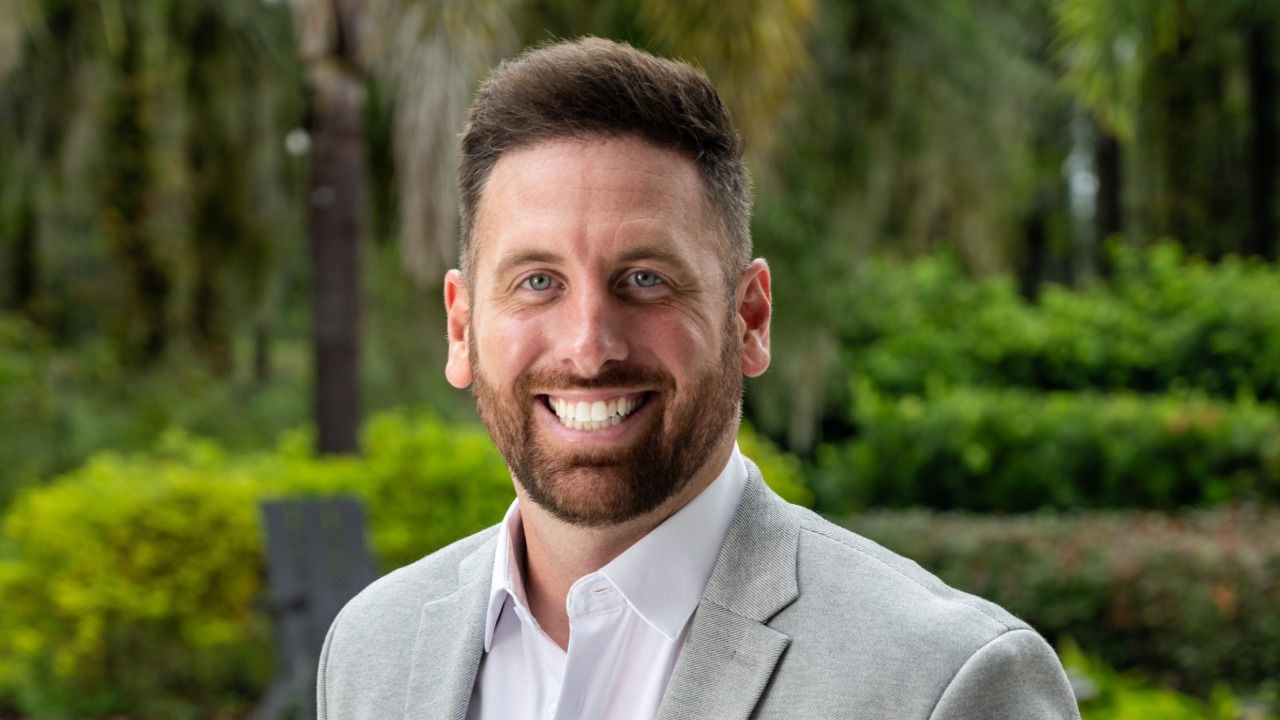
Tim Moore was 15 when someone handed him a VHS camcorder on a church mission trip to the Dominican Republic and Haiti. He had arrived in board shorts and flip-flops, dressed for the Caribbean vacation he thought he was taking, only to find himself accompanying volunteers delivering medicine, food and clothing to communities where families searched through garbage and safe drinking water was scarce. The counselor who gave him the borrowed VHS camera wanted a record of the trip, and Moore, who had never made a film, began recording what he saw.
“I could feel it as I was recording it,” he recalled. Back in Florida, the church asked him to edit his first film for a screening before the congregation, a responsibility he accepted without knowing how to edit. He spent weeks learning, assembling scenes and showing early versions to people whose reactions helped him decide what to keep. By the time the screening approached, the teenage filmmaker, still new enough to the craft to imagine its rewards in Hollywood terms, had developed a rather grand opinion of his accomplishment. “I’m thinking, as it’s about to end, I gotta get my speech ready,” he told me. “I’m gonna get, like, a Golden Globe at the end of this thing.”
The film ended, but the applause Moore had anticipated never came. From his seat near the back of the church, he could see people crying. The counselor described plans to return to the impoverished communities Moore had filmed, build wells for clean water and establish a farm that could provide food throughout the year, then passed a collection bucket through the congregation. “I just watched the whole crowd taking money out of their pockets and putting it in there,” Moore recalled, “giving it to people they had never met, in a country they had never been to, for a cause that two minutes ago they didn’t even know about.”
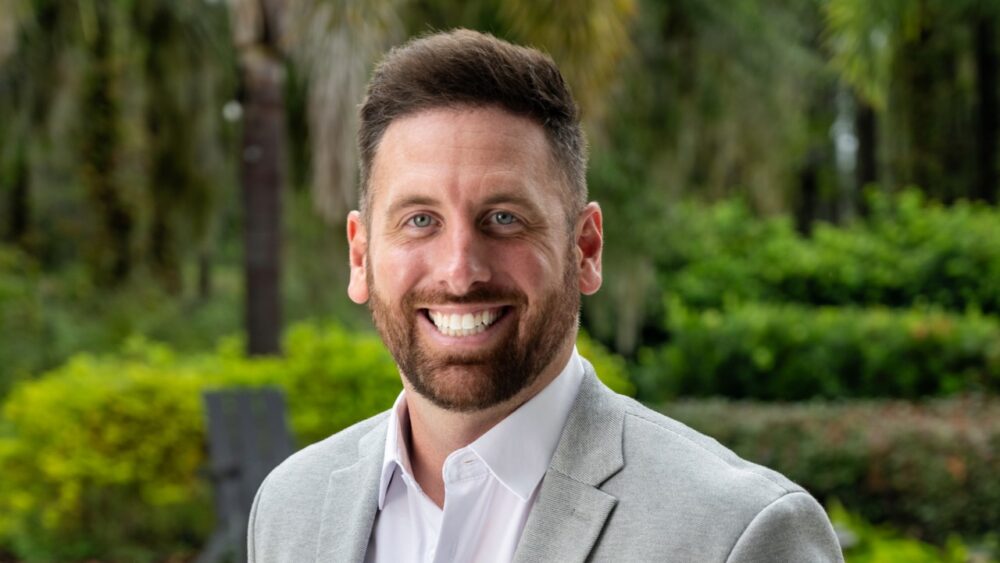
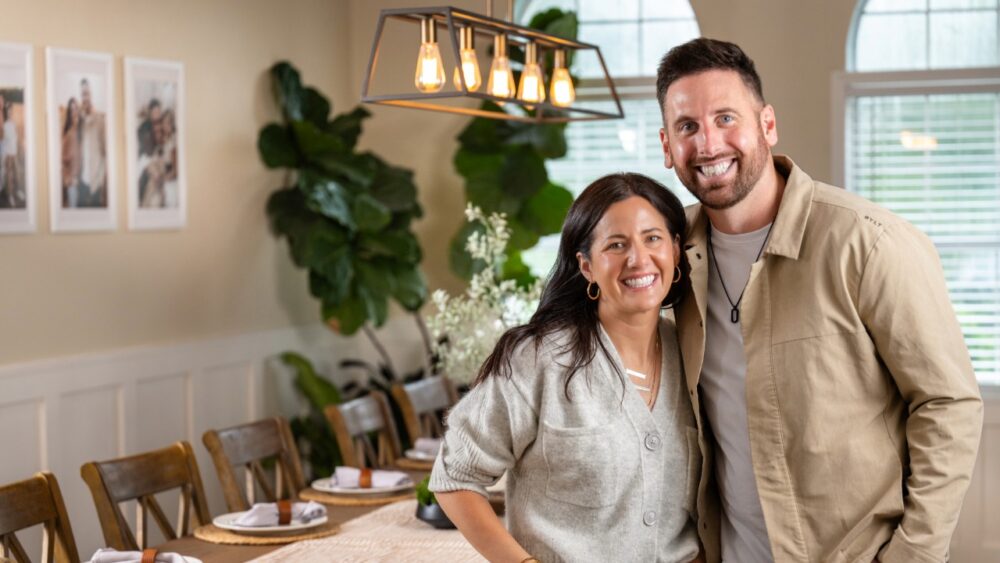
Moore continued making videos after the trip, eventually attending the University of South Florida and taking production assignments through Tampa Digital while shooting weddings with cameras borrowed from friends. He could earn money filming weddings without owning much equipment, provided the friends who owned the cameras didn’t need them on the same dates. At Christmas, he asked his girlfriend, Ashley, for a toaster oven and received a professional camera, the first he could call his own, instead. “I was like, ‘How did you afford this?’” he recalled. “She said, ‘Well, I kept my checks for the past six months so I could buy it.’ And I was like, ‘Dang, now I’m gonna have to marry her, because she’s my first big investor.’”
Ashley, who worked at Cold Stone Creamery, had given him the means to accept assignments without first arranging to borrow equipment. By his senior year at USF, Moore already had four or five employees and was finding it increasingly difficult to justify leaving work to attend classes. The university itself had become a customer, hiring him for productions that included interviews with its president. He left school before graduating to concentrate on Diamond View Studios, the company he was establishing with his roommate, Jon Davila, who had turned away from the medical career his mother wanted for him.
The name suggested facilities considerably grander than those available to its founders. Their office, a 300- or 400-square-foot room near Florida and Fletcher avenues in Tampa, contained a table, a computer and a camera. They had a telephone, a company name and ambitions to acquire customers beyond the relatives who had supplied much of their early business.
One day, a man named Rick called from St. Petersburg and said he wanted to visit. Moore and Davila had never entertained a prospective customer with no family or personal connection to either founder, and the trip across the Howard Frankland Bridge gave them time to prepare. They cleaned their tiny, sparsely furnished office, then went back to their house to dress. Davila emerged in a three-piece suit wearing enormous, medically unnecessary glasses, which he explained made him look smart. Moore put on a suit, too, and they returned to the office, turned up the music and sprayed Febreze.
“We walk out like Dumb and Dumber,” Moore recalled.
Rick took one look around and asked where the studio was. Moore explained that they were just getting started, but he wasn’t impressed. He called them phonies and left. “He was right,” Moore conceded. “From his perspective, he’s so disappointed.”
The following day, Moore and Davila wrote a message on the inside of the office door Rick had just walked through: “We’re not there yet … but we’re coming.” They kept the inscription as Diamond View moved into larger offices, hired employees and acquired the production facilities its name had once promised. The partners built their business at a time when the costly equipment that had separated established production houses from small independent filmmakers was becoming increasingly affordable.
The Canon EOS 5D Mark II, a still camera introduced in 2008 with an unexpectedly useful video capability, was a particularly consequential example. It could record high-definition footage with the shallow depth of field and selective focus associated with professional cinema. Producers who once needed expensive equipment could achieve striking results with a relatively modest investment, giving small companies such as Diamond View an opportunity to compete for work previously dominated by established studios. The advantage was available to anyone who could buy the camera, however, and Moore and Davila had to find customers willing to entrust them with more ambitious productions.
One was Rob Elder, who hired Moore to make a video and began introducing him to people as a Hollywood director. Elder subsequently brought him into an elaborate bar mitzvah production involving an Aston Martin and pyrotechnics, an assignment that grew expensive enough for Moore to regret his original price. The guests saw the finished work, however, and Moore began receiving referrals within a South Tampa network of customers who could afford increasingly sophisticated productions. The company added work for car dealerships, universities and nonprofit organizations, including Big Brothers Big Sisters and the YMCA.
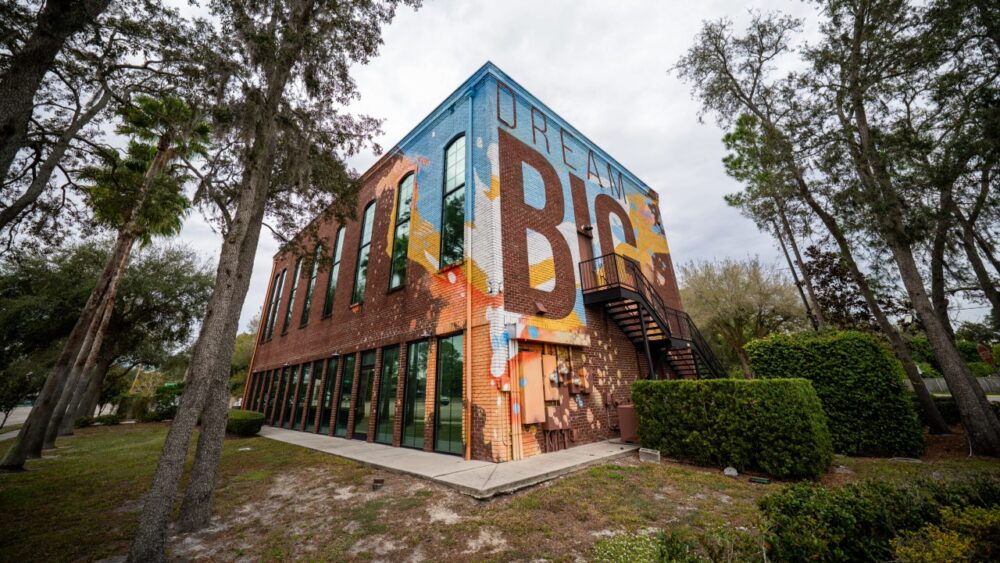
Professional sports remained harder to break into. Diamond View worked on collegiate projects before getting an opportunity with the Atlanta Braves when the team’s regular production company was unavailable for an assignment involving Chipper Jones. Moore recalled that the video performed well enough to earn Diamond View another assignment, this one featuring Freddie Freeman. That production also succeeded, and the Braves eventually hired the company for recurring work. Moore recalled producing roughly 150 videos in a season, a volume that brought Diamond View into contact with sponsors and national brands. The company opened additional offices and eventually occupied a three-story brick building the partners had admired when they were younger.
In March 2020, the pandemic canceled shoots and professional sports, leaving Diamond View’s expanded operation with facilities and employees but little of the work that supported them. Moore closed offices, including the Miami location, and calculated that government assistance would leave the company with approximately four months of operating money. Commercial producers still needed to make advertisements, but travel restrictions and the risks of assembling crews made location shoots difficult. Moore had been following developments in virtual production, including the enormous LED screens used to create digital environments for The Mandalorian, and began considering whether the technology could help Diamond View produce films without transporting crews to the places depicted in them.
He rented vacant space at Tampa’s University Mall and assigned a crew accustomed to cameras, editing and commercial shoots rather than industrial-scale electronics to assemble an LED stage. They bought modules, cabinets and power supplies, connected the components and learned to operate the equipment as they went. The improvised production space needed to be darkened and treated for sound. There were electrical problems and, Moore recalled, some smoke. Every dollar spent on the unfamiliar LED installation was money Diamond View could otherwise have used to remain open while waiting for ordinary production work to resume. “It was very clear to all the staff,” he told me, “that we’re spending the money that we would have had as runway. This has to work within a month.”
Mercedes-Benz, a previous Diamond View customer, needed an advertisement for its new S-Class luxury sedan involving locations across five continents. International travel restrictions made the assignment difficult, but Moore’s unfinished experiment offered another possibility. The car could be transported to Tampa, placed before the newly assembled LED wall and photographed against changing digital landscapes while Mercedes executives in Germany watched remotely.
The prototype S-Class, with flat tires and nonfunctioning lights, arrived in Tampa. Its inability to travel under its own power presented no particular difficulty for a production in which the automobile would remain stationary. The greater challenge was making the surrounding scenery believable, especially in the reflections across the car’s windows and polished bodywork. A car filmed against a green screen can be placed in an artificial landscape afterward, but the reflections must also be created or corrected. The illuminated LED wall surrounding the stationary vehicle supplied those reflections during filming because the displayed landscape cast light onto the car itself.
On Zoom, the Mercedes executives watching from Germany saw the prototype appear to travel through landscapes thousands of miles apart. “They’re like, ‘Holy crap, it looks so real,’” Moore recalled. “They’re going wild. They’re like, ‘Do the trick.’” More executives joined the call, and the crew changed the scenery from a beach to mountains, demonstrating that the car could move between locations without anyone touching it.
The production helped establish Diamond View’s new capability. Jack Daniel’s became another customer interested in filming reflective glass bottles against electronic scenery, and before the 2021 Super Bowl, NBC’s Today show featured the Tampa studio in a segment showing how a correspondent could appear to stand in a snowy landscape created inside a Florida production facility. Moore began receiving inquiries from India, Australia and Malta, a Mediterranean country he admitted he had previously associated chiefly with the word malted. He initially assumed the callers wanted to commission productions or rent time on the stage. Instead, they wanted to know whether Diamond View could build similar installations for them.
The employees who had assembled the experimental University Mall stage had little interest in repeating the experience. They had spent weeks learning unfamiliar equipment under extraordinary pressure, and their intention had been to return to making films once the company could resume normal operations. “I remember the reaction of the team,” Moore told me. “We weren’t ever going to go do that again.” After the seventh or eighth inquiry, however, Moore agreed to find people who wanted to build the installations.
The decision led to Vū, established as a separate company in July 2021 to sell and operate virtual-production systems. In March 2022, Vū announced a $17 million seed financing round, and Moore says it eventually raised approximately $23 million, operated roughly 150,000 square feet across its facilities and employed about 80 people at its peak. Accenture’s venture arm became an investor, subjecting the young company to a level of financial and operational scrutiny Moore had not encountered with individual investors. He likened the due diligence to a “proctologist exam,” but said passing it helped build confidence with other major investors. The company subsequently attracted additional capital and strategic relationships, like Peter Thiel backed 1517 Fund and Pearson, the global education company.
Operating the facilities exposed Moore to the economics of a business different from commercial filmmaking. The capital-intensive stages, with their electronic equipment, large footprints and specialized employees, generated costs whether or not a production was underway. Selling an installation transferred much of that burden to the customer. Moore described one transaction worth approximately $1.5 million, with components costing about $400,000 before engineering, labor and support expenses.
The calculation became more favorable as LED hardware prices fell. Moore said components that had once made installations prohibitively expensive were available at substantially lower prices, allowing Vū to reduce what it charged and pursue customers beyond major film and advertising producers. The company had initially built studios to rent to filmmakers, then discovered that customers were willing to purchase the equipment themselves. Moore eventually sold off Vū’s studio operations and reorganized the company around selling installations and developing technology, retaining the original University Mall location as a place to demonstrate its systems to prospective buyers.
The contraction left a smaller business than the sprawling network Vū had once operated. At the time of our interview, Moore estimated that Vū employed 35 full-time workers and used approximately 40 contractors, while Diamond View had 25 employees. He projected annual revenue for Vū at a little more than $15 million, a figure he supplied rather than one independently verified. The company that had expanded by renting studios itself was now building studios for others with over 150+ studios built to date.
Some of those customers were filmmakers who might otherwise have rented a Vū stage or hired Diamond View. Moore had spent years building a production company whose specialized equipment and technical expertise helped distinguish it from smaller competitors. Now he was helping other producers acquire similar capabilities. The commercial opportunity was large enough that he pursued it anyway, expanding the technology business that had emerged from Diamond View’s pandemic gamble.
Universities became another market. Moore said Vū provided early installations to the University of Tampa and USF, then sold USF four additional studios. Most recently at MOSI in Tampa, the company built a virtual representation of the university’s planned football stadium, allowing project representatives to show prospective sponsors what the venue would look like before construction was complete. The equipment developed to make an immobile Mercedes appear to travel across continents was now being used to help sell a building that did not yet exist.
The customers and applications were changing the composition of Moore’s workforce, too. Vū was hiring more software developers as it pursued visualization tools, artificial intelligence and technology work for institutional and government customers. Moore described entertaining a delegation of roughly 50 representatives of the Singapore government and developing ideas involving AI systems that could operate with more predictable controls. The discussions were evidence of where he hoped to take the company, not necessarily of products already sold or contracts secured.
The experience also changed the questions Moore was asking about the technology. The giant LED walls, capable of surrounding actors and products with convincing digital environments, still displayed images selected and controlled by people operating the equipment. At his home in Lutz, Moore discussed the possibility of displays that could respond to the people watching them. He compared the relationship between emitting and sensing light to the relationship between a speaker and a microphone, and described how additional electronics, microphones and artificial intelligence might allow a future display to register activity in its surroundings.
Moore had been exploring the relationship between visual technology and human responses for years. A 2019 provisional patent application involving Moore and Joseph Register contemplated displays that could adjust their images using information about viewers, potentially including physiological reactions. Moore also described an emotional-induction research study he had conducted and a related family of patent inventions. Together, the projects reflected his interest in developing systems capable of responding to human behavior and, potentially, influencing how people experience the environments around them. The precise findings of the study and the scope of the related patents remain to be established.
One possible application involved a salesperson delivering a presentation while a display registered changes in a customer’s response and relayed information to an iPad. The salesperson could then adjust the conversation, much as an experienced salesman reads a customer’s expressions and body language to recognize when someone becomes distracted or uncomfortable. Moore described the possibility of making those observations more systematic, although he did not demonstrate a working version of the system.
The prospect was particularly interesting coming from Moore, who had spent much of his career making advertisements and had become increasingly concerned about the promises advertisers made. His companies were exploring technology that could potentially make persuasive communication more sophisticated, even as he questioned the industry’s influence over what people wanted and why they wanted it.
In 2019, he published Sold On Purpose, a book written by a commercial filmmaker increasingly troubled by advertising’s promise that buying things could produce happiness. Moore described himself as a “recovering advertiser,” an unusual position for the founder of a production company still making commercial films and exploring technology that might make advertising more responsive to individual audiences. “Advertisers have rebranded the American dream,” he told me, “to life, liberty and the purchase of happiness.”
The book’s planned summer 2019 release was postponed when Moore’s stepfather died by suicide. He had lost his job and was struggling before his death, although the family had not believed he would take his own life. Moore abandoned the official launch and released the book quietly as he turned his attention to his mother. “It was devastating that my mom had to go through this again,” he recalled.
Moore’s biological father had died four days before he was born, leaving his mother to raise him and his older sister while working two jobs, with help from their grandparents in Melbourne. As a little boy, watching other children grow up with two parents, Moore had asked for a father for Christmas. His mother remarried when he was about five, to a widower who became the father Moore had wished for and gave him the surname he still carries.
“For me, it was exciting because I hadn’t had a dad,” Moore recalled of the family’s move into a two-bedroom house provided by his stepfather’s church. “I was like, ‘This is amazing.’ But looking back, it was a very small, kind of humble beginning.”
His stepfather’s church work took the family from one Florida congregation to another, including a small church near Silver Springs and a much larger one in Ocala, before bringing them to Tampa. By ninth grade, Moore had moved eight times, changing schools nearly every year. In Tampa, the family finally stayed put, and Moore met Davila, one of the first friends he made there. Having spent much of his childhood leaving friends behind, he made an effort to keep the people he met in Tampa close. Davila became his business partner, while other early friends and colleagues eventually joined the companies he built.
Among those companies, Vū had grown into the world’s largest network of virtual-production studios, a distinction no competitor came close to matching. By the time he described that achievement to me, he had already sold off his own rental studios and was focused on growing a new line of LED Studios called Experience Centers. When I asked whether he could have imagined any of it while he and Davila were struggling to convince their first prospective customers that Diamond View was a real company, he said he couldn’t have anticipated the decisions that would lead him there. “We tend to make our move before we’re ready; we’ve learned over the years it’s easier to fail fast and adjust than to assume the right strategy in advance,” he said. “You never can truly anticipate in planning all the things you’ll discover through experience, so for us the action is the strategy.”

I asked Moore whether he had ever returned to the Dominican Republic, where he had made his first film at 15. He had gone back recently with his family, this time to help build a small film studio at an orphanage. The trip came after years of constructing increasingly elaborate production facilities, raising millions of dollars and selling studio systems to customers around the world. “The Dominican Republic studio was a full-circle moment,” he told me. “To give back to a place that had given me so much.”