
Tampa Bay’s industrial real estate market is enjoying strong leasing and development activity halfway into 2019. Healthy population and employment growth in the Tampa Bay area are fueling demand for quality, well-located industrial space which, in turn, is encouraging investors and developers to build new product.
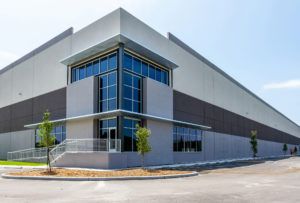
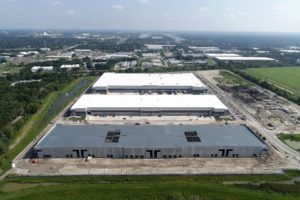
In Hillsborough County, 1.5 million square feet of new industrial product was delivered in the second quarter—the highest quarterly total in the county’s history.
The majority of new construction will be warehouse and distribution as developers feed the high tenant demand for space in the Tampa Bay region. In fact, warehouse and distribution space made up the bulk of all industrial leases in the market, accounting for 79 percent of the total leasing activity. That means companies such as Amazon, its competitors and the third-party logistics companies they use to deliver their products are establishing themselves as the driving force behind our industrial market.
So, what’s spurring all this activity from distributors? It has a lot to do with the combination of Tampa’s healthy market fundamentals and the ever-growing popularity of online shopping. Case in point: It has been widely reported that Amazon was responsible for roughly 50 percent of the nation’s e-commerce sales and 5 percent of all combined offline and online sales in 2018. And while we’re now ordering everything from furniture to pet food online, we’re also expecting it to be delivered faster.
The ability to purchase an item online and find it on your doorstep the next day, or even two hours later, is no longer just a luxury—it’s a requirement. As this dramatic shift in how we shop adds convenience to our lives, it affects how industrial-space users operate.
To ship products in a timely and economical manner, e-commerce companies must position themselves “close to clicks”—meaning, closer to the consumer. Increasingly, we see e-commerce companies and deliverers lease space in what’s called the “last mile,” or the final leg, of a product’s journey from warehouse shelf to consumer doorsteps.
Amazon’s real estate strategy in Tampa Bay aligns with this model. The company occupies more than 2.3 million square feet in the market, with more than 1 million-square-foot fulfillment centers in Ruskin and Lakeland which are used to fulfill next-day and same-day deliveries. In addition,the company has a smaller fulfillment center in the higher-density east Tampa market, which is used to fulfill two-hour deliveries.
Amazon is also looking to further expand its footprint by establishing an operation at Lakeland Linder International Airport. The airport is seeking approval from city commissioners to build a 285,000-square-foot air cargo complex, which Amazon would lease from the city. The deal could bring 1,000 jobs to the area.
But it’s not just Amazon. Bunzl, a multinational distribution company, recently took occupancy of a 212,900-square-foot-space at McDonald Development’s 301 Business Center, located off Columbus Drive in east Tampa. The distribution facility is only halfway complete but already has significant early leasing.
Infill development is key to meeting the demands of e-commerce companies and their customers. Acknowledging this, developer Keating Resources recently began construction on Tampa Fulfillment Center, a 179,080-square-foot facility designed to accommodate both traditional and e-commerce fulfillment users. Slated for completion in March 2020, the facility will feature drive-in/drive-out ramp options and traffic flow that can accommodate both freight trucks and flex drivers (that is, the unmarked white vans often seen delivering your packages). Just 3 miles east of downtown Tampa, its tenants will be able to reach 90 percent of the region’s population in about 45 minutes.
As the year goes on and Tampa Bay continues to enjoy a period of economic expansion, we can expect the industrial market to gain even more momentum. New construction will remain a key driver in the market, as new product continues to boost overall asking rental rates as well as sales activity, as investors increasingly find value in owning industrial real estate here. And as e-commerce companies seek to get closer to the consumer, we can expect an increased demand for “last-mile” distribution space from tenants as well as for infill development sites in dense urban areas from developers.
The future looks bright for the industrial world as we embrace the constantly changing world of e-commerce, consumer demand and the art of fulfilling it.
Scott Garlick is managing principal at Cushman & Wakefield Tampa Bay. [email protected].