
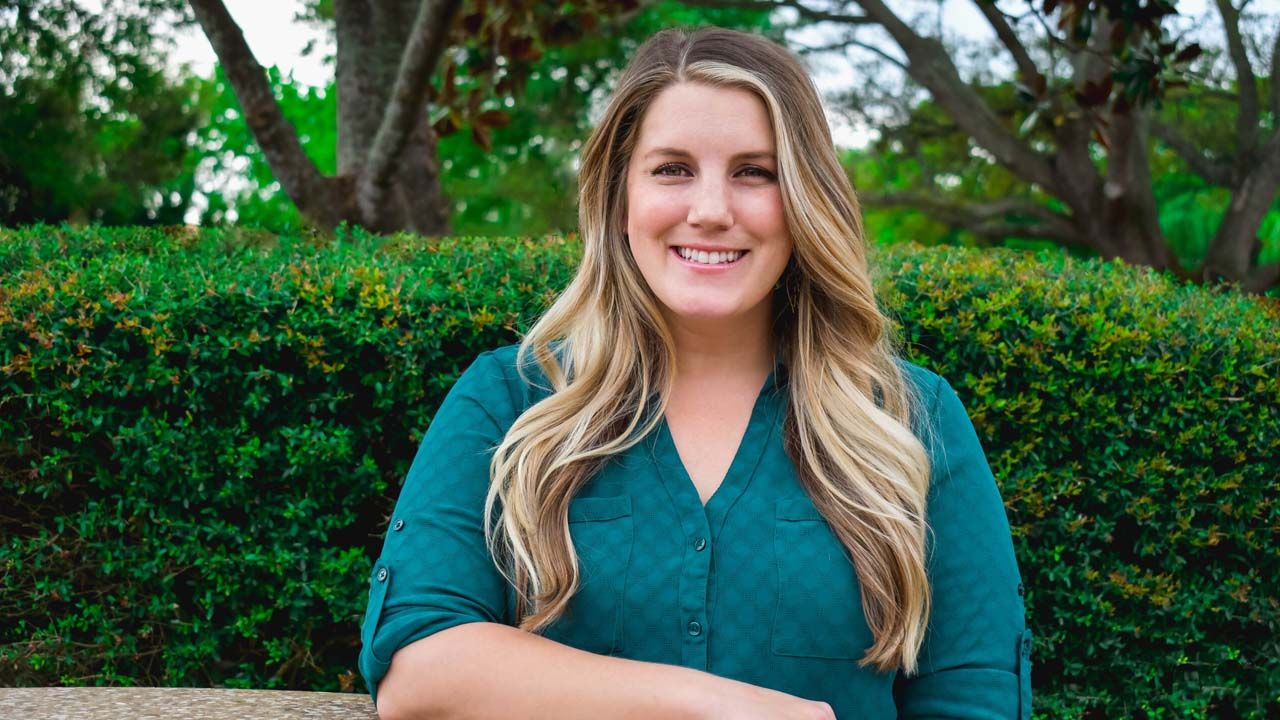
Tampa Bay area native Kristen Bracey discovered her life’s vocation while earning her master’s degree in social justice and human rights at Arizona State University. Working in ASU’s office of sex trafficking intervention research, Bracey had the opportunity to take part in a court-mandated diversionary program supported by Catholic Charities.
For six years, Bracey developed and ran classes for women, men and transgender people convicted of prostitution, striving to give them the tools and confidence to be able to leave “the work” of prostitution for safe, viable employment. Bracey stayed on to receive her master’s in social work at ASU, but it was this diversionary program that inspired her to start I Rise in her home state of Florida. Launched in 2020, I Rise is a nonprofit organization dedicated to supporting marginalized women, whether they’re victims of human trafficking or domestic violence survivors, filling a gap in the systems of care to give these women the skills to enter the workforce, breaking out of survival mode to thriving and truly living.
Bracey, who attended high school in New Port Richey and received her undergraduate degree from the University of South Florida, wanted to use her experience and knowledge to help women in Florida as she and her husband made the choice to move back home.
As Bracey explains, “We know Florida has a human trafficking problem, with so many days of warm sunshine, as a destination state, a tourist economy, with our international airports and seaports. Florida was the apropos place as my home state and the Tampa area as my hometown.”
In moving home, Bracey also became the director of Safe Alliance, a network of anti-trafficking organizations in the Tampa Bay metro area and credits the “amazing people already doing incredible things” to help combat trafficking in the greater Bay area.
I Rise fits in to offer economic stability. As Bracey explains, “economics is one of the biggest problems that creates the perpetual cycle of oppression, violence and exploitation for women. That’s why I Rise exists, because we want to be a part of the solution. Once a woman escapes a violent or exploitative situation and has received crisis services that help meet basic needs and provide a sense of safety and stability, she can finally start thinking about the future … that’s where we come in, and we say, how can we help keep you on this path so we can help keep you out of that situation and help you move from surviving to thriving?”
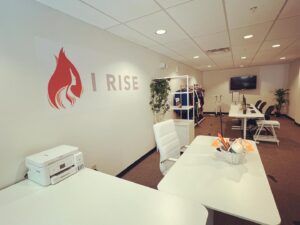
Offering workshops for financial literacy and work skillsets, I Rise provides support systems toward viable work opportunities. Bracey learned in Arizona how economic instability forces the marginalized into patterns of abuse, whether it’s staying with a violent partner or remaining in a life of prostitution. I Rise offers a traditional workforce development program, teaching both the hard and soft skills of employment. What sets I Rise apart is their commitment to being trauma-informed and person-centered in their approach.
As Bracey details, “We adopt a sanctuary model approach where everyone, the staff, the volunteers, the board of directors, is trauma-informed and has received the training to understand the clients that we serve and their unique needs to create a really safe environment based upon trauma-informed principles.”
Making sure the women gain financial literacy and the skills to enter the workforce are critical to their future success and I Rise provides another layer of support with its Rising Leaders Network, an opportunity for survivors to make connections and further their professional leadership skills with ongoing training opportunities. The Rising Leaders Network is led by survivors and Bracey says that’s part of I Rise’s ethos, to empower survivors to help themselves and support each other.
“Everything that we do is as survivor-led as possible. So we have a survivor on our board of directors, and that’s written in our bylaws, because we just believe in it so much,” she says. “When we hire staff, we try to hire survivors. We have a survivor advisory board that’s separate from our board of directors that we frequently consult with and then, of course, the person who will facilitate that Rising Leaders Network is a survivor leader.”
A third layer of support is currently a work in progress. Bracey calls on the wider community for assistance in building the I Rise Business Collaborative, a growing group of businesses throughout the Bay area willing to support these women as they enter into the workforce.
“We are really interested in partnering with employers from very diverse sectors so that we have a variety of experiences to offer to our students,” Bracey says. “From cosmetology to finance, from marketing to education, the restaurant or hospitality industry, whatever it is, we’re looking for diverse partners.”
Partnering can include one-off classes for workforce development or professional training, offering internships or even entry-level employment. As Bracey points out, Florida law expunges criminal records for human trafficking victims so these women can make a fresh employment start. “We really believe in the hallmark of our organization that a survivor should not just survive. We don’t want women to continue to pay for something that happened to them. We want them to be able to gain financial independence and stability, to gain upper mobility and to start building wealth; to find a career that they love, that gives them a sense of dignity and helps them feel proud and their children feel proud. And then, in essence, we can break the cycle for the generations to come.”
Helping victims to take financial control of their futures in order to thrive, I Rise serves the Bay area’s marginalized populations and calls on local business leaders to do the same. ♦